Balancing User Needs and Business Goals in Product Development
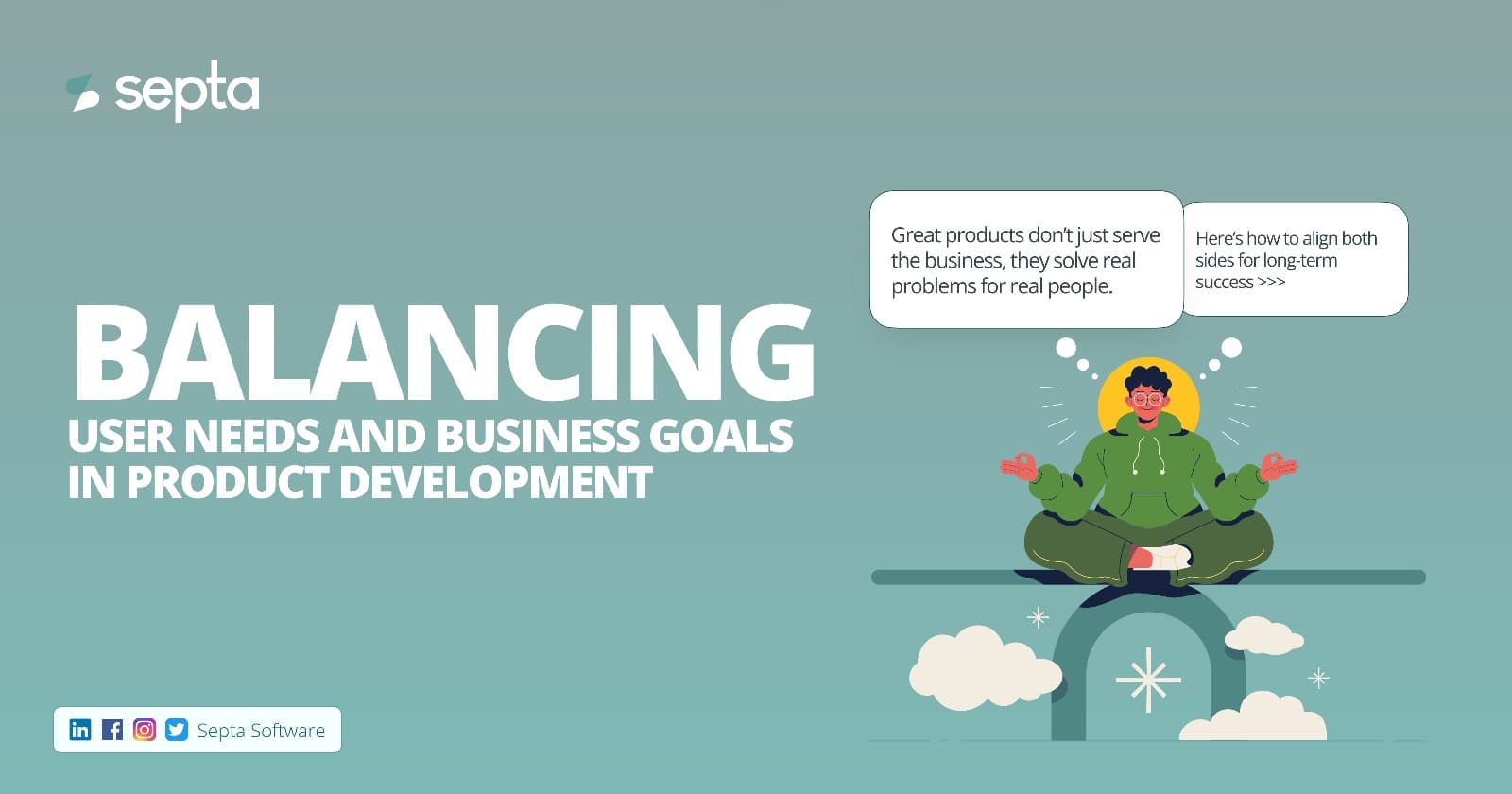
In today’s business world , building a successful product isn’t just about innovation, it's about alignment. Too often, teams pour energy into crafting feature-rich platforms or chasing revenue goals, only to find that users don’t stick around. On the flip side, some products win user affection but fail to deliver measurable business value.
So what’s missing? Balance
Let’s face it:
A product without users will fail no matter how solid the business plan.
A product without strategy won’t scale no matter how sleek the user experience.
The truth is, success doesn’t come from choosing one over the other. It comes from bridging both. That means aligning your product with the real needs of users and the long-term goals of your business.
When a product meets real user needs while contributing to business growth, it becomes sustainable, scalable, and truly impactful.
ALSO READ: TOP 10 PRODUCT DEVELOPMENT RISK AND HOW TO AVOID THEM
Smart ways to balance both sides
Achieving this balance doesn’t require guessing or luck; it takes intentional strategy, teamwork, and iteration. Here are a few ways product teams can work smarter:
1. Define clear user personas
Great products start with empathy. That means deeply understanding who your users are, what they value, and what problems they’re trying to solve.
User personas help you:
Stay focused on solving real needs, not assumptions.
Prioritize features based on value, not trend.
Avoid wasting time building things no one asked for.
Build personas using actual research interviews, surveys, and behavior data not just gut instinct.
2. Involve cross-functional teams
Balancing user and business needs is not the job of a single department. Designers, product managers, developers, marketers, and stakeholders all bring different perspectives to the table.
By working together:
Designers can advocate for usability.
Marketers can align messaging with user pain points.
Product managers can ensure feature prioritization supports business goals.
Cross-functional collaboration ensures a 360° approach that’s harder to miss the mark.
3. Set KPIs for both UX and business performance
You can’t improve what you don’t measure. Set clear, trackable KPIs that reflect both user experience and business outcomes.
For users:
Task success rate
Net Promoter Score (NPS)
Retention rate
For the business:
Monthly recurring revenue (MRR)
Customer acquisition cost (CAC)
Conversion rate
Tracking both types of KPIs will help you course-correct when needed and celebrate wins that matter to everyone.
4. Use continuous user research
Product development isn’t one-and-done. What worked last month may not meet today’s needs. That’s why continuous user research is key.
Use tools like:
Usability tests
Feedback forms
A/B testing
User interviews
Regular touchpoints with real users ensure your product evolves in a way that stays relevant and competitive.
Build a Product That Works for Everyone
Balancing user needs and business goals isn’t just a framework, it's a mindset. When product teams shift from “either/or” to “both/and,” they unlock new opportunities for growth, impact, and innovation.
At Septa Software, we help teams design and build digital products that don’t just function, they thrive. From deep user research to strategic product design, we guide companies through the entire lifecycle to ensure every product delivers on what users want and what the business needs.
Ready to build something that lasts? Let’s create better, together.
Visit www.septasoftware.com to get started.