Monitoring vs Observability: What Every Engineering Team Should Know
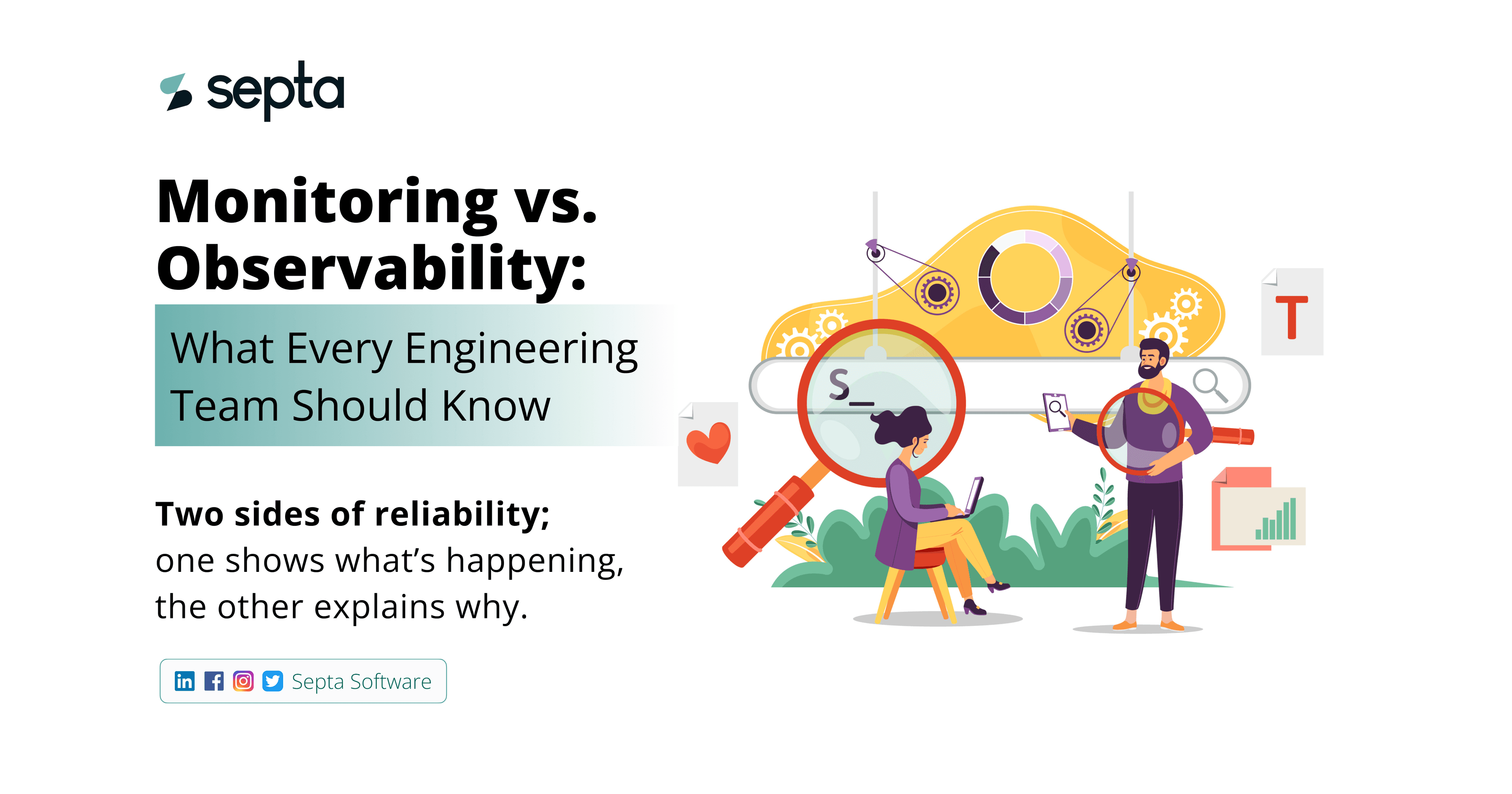
Every engineering team wants one thing: systems that stay up, perform well, and deliver flawless user experiences. But as modern infrastructures become more distributed and dynamic, traditional monitoring alone isn’t enough. Observability has become the key to understanding what’s happening inside your systems not just when they break, but why.
Monitoring and Observability: What’s the Difference?
At a glance, monitoring and observability seem similar, but they serve different purposes.
Monitoring is about collecting predefined metrics, logs, and alerts. It tells you what went wrong. For example, if CPU usage spikes or an API call fails, monitoring tools alert your team immediately!.
Observability, on the other hand, digs deeper. It helps you understand why something went wrong even in systems you didn’t specifically prepare to monitor. Observability gives engineers the ability to ask new questions about unknown problems, using data from metrics, traces, and logs in real time.
Think of monitoring as checking your car’s dashboard lights while observability is like looking under the hood.
Why Your Team Needs Both
Monitoring and observability work best together. Monitoring keeps your systems in check, while observability gives you the insight to predict and prevent incidents before they escalate.
Here’s how the two complement each other:
Monitoring detects symptoms; observability diagnoses causes.
Monitoring uses static alerts; observability supports dynamic exploration.
Monitoring tells you what happened; observability explains why it happened.
Together, they help engineering teams reduce downtime, resolve incidents faster, and continuously improve reliability.
A Quick Real-World Example
Think about how companies like Netflix and Uber handle millions of requests per second. Their systems can’t rely on manual checks or simple alerts. Netflix uses a robust observability stack built around Atlas for metrics, Zipkin for distributed tracing, and custom dashboards for visualization. This setup allows them to detect failures in milliseconds and understand performance patterns long before users notice.
Similarly, Uber handles massive traffic with a combination of Prometheus for monitoring, Jaeger for tracing, and internal visualization tools, ensuring their services remain reliable and performant at scale.
In both cases, these companies show how automated, real-time observability is essential for modern, high-volume systems keeping downtime minimal and users happy.
Building Observability into Your Engineering Culture
True observability isn’t just a toolset, it’s a mindset. It starts with designing systems that produce rich, meaningful telemetry data and building a culture that values continuous learning.
Here are key steps to build it into your workflow:
Instrument everything: Metrics, logs, and traces form the foundation.
Centralize your data: Use a unified platform where teams can visualize and correlate data easily.
Automate responses: Link insights to automation for faster recovery.
Encourage curiosity: When something breaks, ask not just what failed, but why and how you can prevent it next time.
The Future: Predictive Observability and AI
The next frontier of observability is predictive intelligence. With AI and machine learning, tools can detect anomalies, forecast potential system stress, and even recommend fixes before issues impact users. For engineering teams, this means moving from reactive firefighting to proactive prevention, the true future of reliable software delivery.
Why This Matters for Your Business
When teams can see clearly into their systems, they make smarter decisions, deliver smoother customer experiences, and recover faster when things go wrong. Monitoring keeps your operations stable; observability makes them intelligent. Together, they transform how your business approaches uptime, performance, and customer trust.
Build Reliability from the Start
At Septa Software, we help businesses design reliability into every layer of their systems. From building observability pipelines to setting up real-time monitoring dashboards, we empower your team to stay ahead of downtime and performance issues.
If you’re ready to make your systems faster, more reliable, and smarter, book a free consultation with Septa Software today. Let’s build reliability that grows with your business. Visit www.septasoftware.com to get started.